







I have always had a soft spot in my heart for islands. I was born on the Northern Mariana island of Saipan and raised on the neighboring U.S. Territory of Guam. My favorite book growing up was L.M. Montgomery’s Anne of Green Gables, set on Canada’s far away Prince Edward Island, and over the years, I’ve visited Hawaii, Jamaica, Nantucket, the United Kingdom. You get the picture. I like islands.
I like them so much that two of my books, Isle of Blood and Stone and Song of the Abyss, are set on the fictional island kingdom of St. John del Mar. Both stories were also inspired by a childhood love of the Indiana Jones movies, as well as a lifelong fascination with old, old maps.
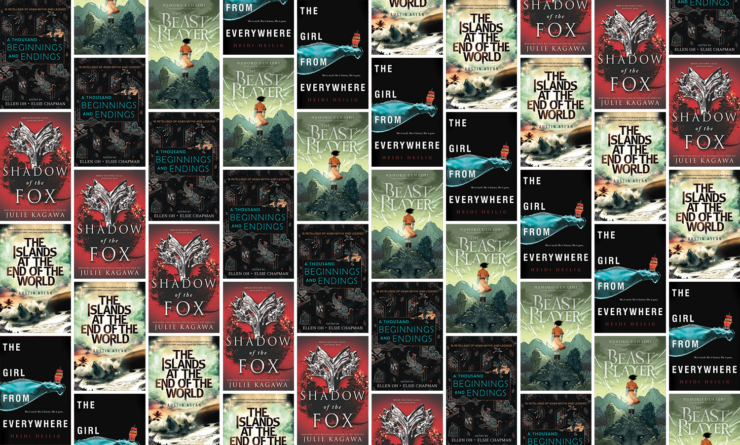
Here are a few of my favorite books set on islands, both real and imagined.
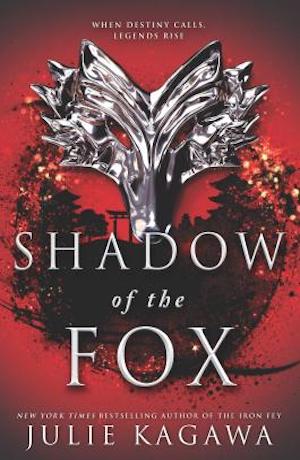
Shadow of the Fox by Julie Kagawa
“It is very hard to be human, little fox. Even the humans themselves don’t do a great job of it.”
In this Japanese-inspired fantasy, Yumeko is a half-human, half-fox raised by the monks of the Silent Winds Temple. The monks have in their possession part of an ancient scroll that, when made whole, will summon the Great Kami dragon from the sea and grant its possessor a single wish. When her guardians are murdered by demons searching for the scroll, Yumeko manages to escape, only to tumble directly into the path of a brooding young samurai, one who may end up being her fiercest protector, or her deadliest enemy.
Shadow of the Fox is a fun start to the trilogy (see also Soul of the Sword and Night of the Dragon), filled with evil courtesans, sinister assassins, and some seriously scary fantastical creatures.
The Islands at the End of the World by Austin Aslan
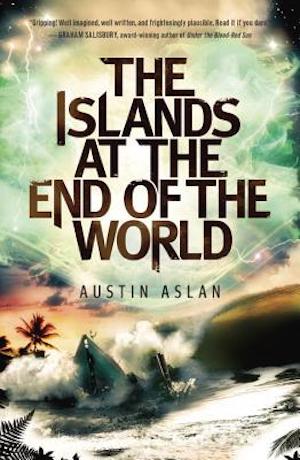
Sixteen-year-old Leilani lives on the Big Island of Hawaii with her parents and younger brother. The seizures brought on by epilepsy have changed the way she lives, forcing her to give up gymnastics and limiting the time she can spend on her beloved surfboard, out in the open sea. When Lei and her father travel to Oahu to begin clinical trials of a new epilepsy drug, a global disaster strikes. The cellphones stop working, then the Internet, then the power grid. Hawaii is cut off from the outside world. Lei and her dad must find their way home, traveling across islands where lawlessness abounds and food is scarce. Through it all, Lei’s seizures grow stronger, and carry with them the voice of a mysterious being, one whose identity may hold the key to saving her island.
I love disaster fiction, and this book, written by an author with a degree in tropical conservation from the University of Hawaii at Hilo, comes with a beautifully rendered setting. The second book in the duology is called The Girl at the Center of the World.
A Thousand Beginnings and Endings edited by Ellen Oh and Elsie Chapman
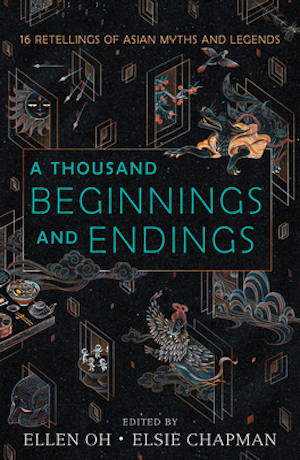
In this wonderful collection of short stories and fairy tales, fifteen acclaimed authors share retellings inspired by their own East and South Asian cultures (including Japan and the Philippines). In “Forbidden Fruit” (Roshani Chokshi), a mountain loses her heart to a human, with unexpected consequences. In “Eyes Like Candlelight” (Julie Kagawa), a young boy rescues a fox from certain death. It is the first encounter between boy and fox, but not the last. And in “Code of Honor” (Melissa de la Cruz), a lonely vampire witch (called an aswang) travels the world searching for a place to call home, before finally arriving in Manhattan.
The Beast Player by Nahoko Uehashi, translated by Cathy Hirano
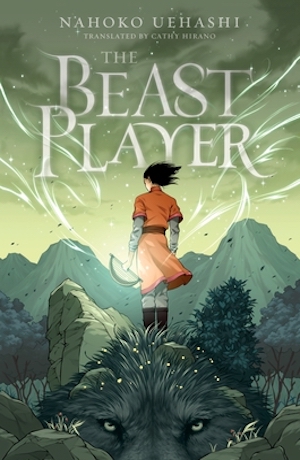
Elin’s mother is a respected beast doctor charged with caring for the Toda, the terrifying sea serpents that make up part of the king’s army. But when a number of serpents die under suspicious circumstances, her mother is stripped of all honor and sentenced to death. Uprooted from her village by the water, Elin must find her own way in the world, coming of age in an unfamiliar land, and coming to terms with her own mysterious abilities to communicate with the Toda.
Set in an alternate version of Japan, The Beast Player is an excellent start to the duology by Nahoko Uehashi (followed by The Beast Warrior), who is also a professor of cultural anthropology.
The Girl From Everywhere by Heidi Heilig
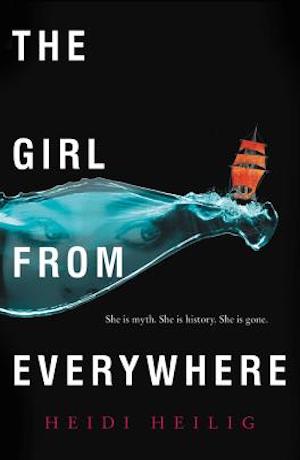
Nix has sailed across the world and through the centuries alongside her time traveling father, who has never recovered from the death of Nix’s mother. When a map from 1868 Honolulu surfaces, it gives him the opportunity he’s been searching for-to travel to Hawaii the year before her death and save her life. But no one knows for sure what will happen if he tries to change the past, and his obsession will put Nix-her past, present, and future-at risk.
This book has all the good stuff: science fiction, fantasy, Hawaiian history and mythology…and a sequel. Be sure to check out The Ship Beyond Time.
Makiia Lucier grew up on the Pacific island of Guam and has degrees in journalism and library science from the University of Oregon and the University of Wisconsin-Milwaukee. Her historical fiction and fantasy titles have appeared on many notable lists, including the Kids’ Indie Next, the American Booksellers Association’s ‘Best Books for Children,’ and the American Library Association’s ‘Best Fiction for Young Adults.’ Her forthcoming YA fantasy, Year Of The Reaper, hits shelves on November 9, 2021. She lives with her family in North Carolina. Visit her at her website or on Instagram @makiialucier.


There’s the classic Islandia, by Austin Tappan Wright. 1910ish young man becomes the US Consul to the nation of Islandia because he speaks the language due to his college friendship with an Islandian native. He comes to love the island’s people and its culture and that puts him in conflict with the expectation that he will help open Islandia to world trade.
I haven’t reread this for years. I hope my copy – which was falling apart – is still in the basement somewhere, because it’s apparently hard to find.
By Clarke, “The Songs of Distant Earth”, “The Fountains of Paradise” and “Dolphin Island”.
The Earthsea books by LeGuin.
Earthsea as the primary “world of islands” in fantasy.
My favourite other children’s fantasy novel with an island setting is “Gullstruck Island” by Frances Hardinge. Lovely world-building with the volcanic island, tribal vs colonial mixture of cultures, and mysterious magic. I loved it when I found it in later life and I wish I’d been the right age for it as well.
Christopher Priest’s Dream Archipelago series. H.G. Wells The Island of Dr. Moreau.
Uh… The Island of Dr. Moreau, anyone?
@5 rickarddavid
I see your The Island of Dr. Moreau, and raise you a Mysterious Island!!
I’ll add Sir Terry Pratchett’s Nation to the mix. Just a brilliant book, emotional and powerful – one that stays with you after in the best way. He (momentarily) set aside Discworld to write this, and his love for it shows in every word.
What about the Hidden Sea Tales by A.M. Dellamonica? Mostly set on islands.
Born and raised on Long Island, New York, though it was a long time before I formed the habit of thinking of it as an island. My earliest association with islands were places such as where the Swiss Family Robinson lived. Islands were covered with jungle, not asphalt, tract housing and strip malls. Islands were menaced by pirates and tigers, not drunk drivers, auto-exhaust and high population density. They were mysterious, unspoiled places, far from the humdrum reality of everyday existence.
Earthsea, as noted, must be the king of island fantasies. Islandia (which I learned of through LeGuin and I presume inspired her) was an inspired idea, dating from a time before imaginary countries were commonplace. As a novel, however, I must admit I found it unreadable.
Island in the Sea of Time and its sequels (by S.M. Stirling) take the characters over much of the globe, but the story starts on Nantucket. The Nantucketers and the wash-ashores are beginning to think about getting ready for tourist season in March 1998, when suddenly they, along with some unlucky folks sailing nearby, are yanked back in time to 1276 BC. Now this picturesque tourist trap cum historical district contains all that is left of modern civilization, and the thousands of castaways have to figure out how to survive, and hopefully thrive, in a world that is familiar, yet alien. The earlier chapters have some interesting details about gearing down and the dangers of acting on what you think you know.
@1
Islandia is set in a nation situated on a larger landmass, although it’s pre-Meiji Japan-like isolation may qualify it.
It’s cited as an example of utopian fiction, which brings to mind the source of the word — Thomas More’s Utopia, which is itself set on a fictional island.
Gulliver’s Travels takes place, at least partially, on islands. Been a while since I’ve read it though. Treasure Island, obviously, though it’s not SFF. There’ve been some SFF adaptations of it though. “If sailor tales to sailor tunes…”
For some reason my first thought was of William Pène du Bois’s children’s book The Twenty-One Balloons.
@13: your first thought was my first thought, too.
@13, @14
Oh how I loved that one
No love for The House in the Cerulean Sea?
I live in Sardinia so yes, I love islands too. ^^
And I loved Francis Hardinge archipelago in Deeplight as much as Le Guin’s Earthsea. <3
Isle of the Dead by Roger Zelazny might qualify as everything leads to an island.
Lady in Gil by Rebecca Bradley is almost all on one island.
Cast Under an Alien Sun by Olan Thorensen is set on a island, although admittedly a big island.
If we are allowed multiple islands and sailing between them, A Wizard of Earthsea by Ursula K. Le Guin might be considered.
The Wolfe Archipelago by the intrepid and inimitable Gene Wolfe.
The Gulag Archipelago by Alexander Solzhenitsyn…not nearly as much fun.
I first read “Dolphin Island” in elementary school. Still a favorite 40 years later.
@9 I like Islandia, but it’s easy to see why one might find it unreadable. It’s rather ponderous.
@13, @14, @15 I should have remembered that. I loved that book.
@16 I like The House in the Cerulean Sea, and it’s certainly on an island, but to me it doesn’t have the island vibe of a world apart.
Do you mean Island of the Blue Dolphins by Scott O’Dell? I have fond memories of reading that at school too. I also really like FoxMask by Australian author Juliet Marillier
Cloud’s End, by Sean Stewart
I instantly thought of Abarat. What a wonderful archipelago.
Since we’re speaking of children’s books, I just remembered Eva Ibbotson’s Island of the Aunts. The Aunts live on their Island and “look after things that come ashore. Oiled seabirds… stunned seals… poisoned squids… and other things…”
A noble cause, really, and one that surely justifies a spot of kidnapping now and then?
The first SFF book I read with an island setting was Perelandra by C.S. Lewis. It’s the second in his space trilogy. In it the main character gets sent to a planet that has only one fixed continent and the rest of the land masses are small, floating islands. It is my favorite of the trilogy.
Jack Vance’s The Blue World (1965), about a tropical water world where shipwrecked humans live on islands that are actually giant plants. And life is idyllic … except for the giant sea monster that, the priests say, must be propitiated.
Vance really knew his islands — he spent World War Ii crossing and recrossing the Pacific in the Merchant Marine — and his love for them, and for the tropical sea, really comes through.